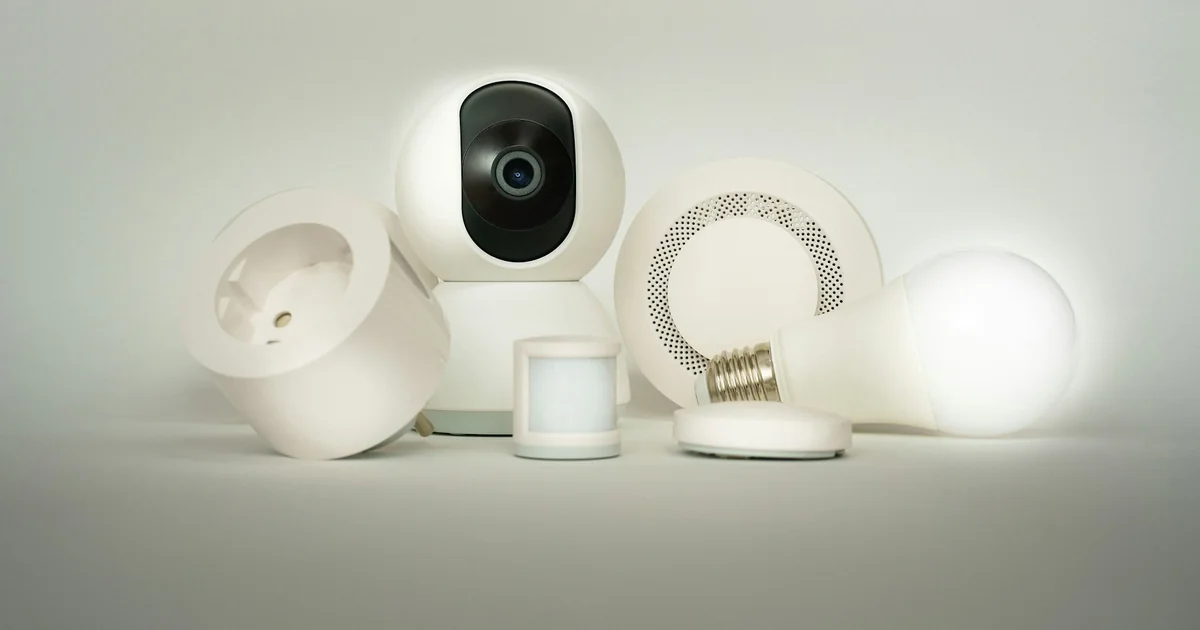
Black Friday is Friday, November 27, 2026. Cyber Monday is Monday, November 30, 2026. This page exists before either date for a reason: the worst time to decide whether a red sale badge is meaningful is while a checkout timer is trying to make the decision for you.
I am not publishing a pretend deal list weeks early. There are no Black Friday deals claimed on this page today. What I have is the buying framework I use for Home Assistant hardware, a short list of products that solve real problems in a house, and a hard rule that a discount never gets to outrank local control, compatibility, or install reality.
That last part matters. Smart-home sales bring out every bad listing pattern at once: wrong regional variants, stale models, bundles that quietly omit the gateway, and cloud gadgets priced low enough to look tempting but expensive enough in attention to regret. I would rather miss a coupon than send somebody toward a device that needs an account, calls home to work, or becomes a support project for the person who received it.
The rest of the winter campaign is built around the same idea. Start with weather stations that give Home Assistant useful local outdoor data. Then use that data and a few well-placed sensors in the Home Assistant winterization guide. If you are shopping for somebody else, the smart-home gifts guide for Home Assistant users is the more useful starting point. This hub is for the moment an actual sale window opens and the decision needs to be fast without getting sloppy.
Build the cart around problems, not categories
The right Black Friday cart comes from a problem list made before the sales begin. Mine is short: protect the house from water, keep heat locally controllable, see the approaches to the house on dark winter afternoons, and know when a door or window changed state.
That is more useful than a generic “smart home” cart because it exposes prerequisites early. A thermostat may need a compatible HVAC system and a Z-Wave controller. A valve actuator needs a quarter-turn main shutoff, clearance, and an outlet. A PoE camera needs a cable path, switching or injector power, and somewhere local to record. A contact sensor needs a healthy Zigbee mesh. The sale is the easy part. The install path decides whether the purchase survives past the first weekend.
I also separate repeatable hardware from one-off bargains. Sensors, smart plugs, and contact sensors can be sensible bundle purchases once you have tested one unit. Infrastructure deserves a smaller first order. I would not buy eight cameras because a price looks good before confirming the stream behavior, storage plan, PoE budget, and field of view at the actual mounting location. Same with valves and thermostats. A lower price does not make a mismatch fit.
The small watchlist
These are products I will check during the November 27 to November 30 window. Their presence here is not a statement about current price, future discount, inventory, or sale timing. It is a list of hardware I would consider at a verified price because each one has a useful Home Assistant path and a job that becomes more relevant during cold, dark, travel-heavy months.
Resideo T6 Pro Z-Wave TH6320ZW2007/U
Resideo marks the TH6320ZW2003 from my older Honeywell T6 Pro Z-Wave review as discontinued. The watchlist item is its direct replacement, the TH6320ZW2007/U with SmartStart. The older review remains useful for the local-control behavior and HVAC compatibility gates, but its 2003 purchase link is not the model to buy now.
The current 2007 model keeps the reason the T6 Pro belongs here: it uses Z-Wave, exposes a local control surface at the wall, and can run without a vendor cloud account. Home Assistant can track the temperature and change a setpoint while the thermostat keeps controlling the HVAC system if the server is down. Confirm the exact model number, your heating and cooling stages, and whether you will run a C-wire or batteries. The older 2003 and similarly named Wi-Fi versions are not substitutes.
The live sale test will compare the exact TH6320ZW2007/U against a recent defensible price and accept only a new unit from a retailer and fulfillment path I would use. Used, open-box, old-stock 2003, and wrong-variant listings stay off the page. A thermostat is not a fun impulse purchase. It is something I want installed and tested before the next cold night.
Zooz ZAC36 Titan water valve actuator
A water shutoff is the type of purchase people postpone until water is already in the wrong room. My local water shutoff guide explains why I like the Zooz Titan path: it uses Z-Wave, mounts over an existing quarter-turn ball valve, and can use a wired leak probe as a hardware-level fallback.
The pre-buy check has nothing to do with price. Measure the valve and surrounding clearance first. The actuator only makes sense on a compatible lever-style ball valve, and a cramped utility room can turn a good sale into a return label. Confirm the electrical outlet, the plumbing layout, the Z-Wave coverage, and the leak sensors you will actually use. Then let the price decide whether to buy now or wait.
This is a good winter watch item because freeze-thaw cycles and travel season are bad times to learn that a slow leak can run for hours. But I will still skip any offer that hides a wrong revision, a used condition, or a bundle that does not match the installation plan. Damage prevention does not need cleverness. It needs a valve that closes when it is told to close.
Reolink RLC-811A PoE camera
The Reolink RLC-811A review is my exact reference here. The camera earns a watchlist spot because it is wired PoE hardware with 4K video, optical zoom, local recording options, and a useful path into Home Assistant and Frigate. A local camera is much more interesting to me than a deeply discounted battery camera that wants a subscription before it shows useful footage.
A camera sale only counts if the exact listing has the right RLC-811A model, normal new condition, and a purchasing path that does not conceal a missing power plan. PoE means the camera needs an IEEE-compatible switch or injector, a network cable, and a plan for storage. It also needs a deliberate location. The zoom lens is useful for a driveway or gate, not a reason to expect one camera to cover every side of a property.
For Home Assistant, I will verify the current local integration path and the stream behavior needed for the installation. I would still block a camera from the open internet when the local network, Home Assistant, and recording host can do the actual work. A Black Friday price does not change that architecture.
SONOFF SNZB-04P contact sensor
The SONOFF SNZB-04P review covers the small hardware that pays off when it is everywhere instead of rationed. This Zigbee contact sensor fits exterior doors, windows, a garage walk door, a utility closet, or the door to the room holding a freezer. In winter and holiday travel, a quick local open or closed signal is more useful than another notification-heavy cloud accessory.
It is also the one watchlist item where a multipack can make sense, but only after checking your Zigbee mesh. Battery devices do not extend the mesh. The coordinator needs enough powered routers in the places where the sensors will live, and every sensor should be paired and tested before it goes on a high window frame.
SONOFF sells the exact SNZB-04P directly, so the direct route comes first: check SONOFF with code JPK. The Amazon search fallback is there for a combined cart or faster shipping. I will not assume that a multi-pack price is better merely because the package is larger. The live per-sensor total has to earn that conclusion.
What I will skip
I will skip a product with an impressive discount if it requires a subscription for its useful function, relies on a brittle cloud-only integration, or lacks a clear local fallback. Ring-style and generic Wi-Fi bargains often land here. A low front-end price does not erase ongoing payments, a data-collection trade-off, or the support burden created when a vendor app changes.
I will also skip crossed-out list prices with no credible recent comparison, marketplace listings with an unclear seller or used condition, and bundles that obscure what is included. A sensor kit without the required hub is not a deal. A camera without the network and storage plan is not a deal. A thermostat in the wrong HVAC configuration is not a deal.
Finally, I will skip hardware that I cannot verify in the live sale window. There is no consolation prize for publishing a vague offer. If I cannot see the current price, identify the exact product, confirm the compatibility path, and establish useful price context, it stays off the page.
Update policy
I will add a live deal only after verifying the live observed price, a defensible comparison, the exact product and bundle, a timestamp, Home Assistant compatibility, and local-control quality in the same update. Each entry will state when I checked it and link to the exact buying path.
If the price changes, a coupon disappears, a seller changes, or the product page no longer matches the described configuration, I will remove the price or relabel the entry rather than leave stale information in place. I will not predict discounts, sale start times, stock, or availability. I will not convert a pre-sale watchlist item into a deal until the evidence is on the page.
FAQ
Is Black Friday better than Cyber Monday for Home Assistant hardware?
Neither date wins by default. Wired infrastructure, sensors, and automation hardware can appear in either window, and the right decision depends on the exact price and product. I will treat November 27 through November 30 as one verification window, not assume that a Friday badge beats a Monday one.
What should I buy first for a winter-ready Home Assistant setup?
Start with the failure you can least afford to miss. For a cold house, that may be temperature sensing and a locally controlled thermostat. For a basement or utility room, it may be leak sensors and a shutoff plan. For an exposed approach, it may be a wired local camera. The winterization guide helps turn that choice into a tested system.
How do I avoid buying the wrong smart-home bundle?
Read the model number, radio protocol, included hub or gateway, power requirements, regional variant, and return terms before looking at the discount. Then sketch the install: where it mounts, what controls it, how it communicates, and how it behaves when the internet is down. If that exercise reveals a missing part, the advertised bundle was never the right purchase.
Why does local control matter if Home Assistant is already on my network?
Because the device itself can still depend on somebody else’s server. A local protocol keeps the control path inside the house and makes the system easier to inspect when something fails. I still want physical controls and device-resident behavior where it matters. Home Assistant is the coordinator, not an excuse to build one fragile point of failure.
The Bottom Line
Before Black Friday, decide what problem you are solving and read the exact guide for that hardware. During the sale window, use the timestamped price evidence rather than a percentage badge. That is how a holiday purchase becomes a working part of the house instead of another app and another box.
Hero photo: Jakub Żerdzicki on Unsplash, used under the Unsplash License and cropped from the original.