I have a rule about budget audio gear: it almost always has a catch. The cheap DAC has a noisy ground. The cheap amp clips the second you turn it up. The cheap speakers sound great until you hear a real one. So when the Fosi Audio ZA3 started showing up in every budget audiophile thread with people swearing it embarrassed gear five times the price, I assumed there was a catch I would find in a week.
Six months later I am still looking for it. There are trade-offs, and I will lay them out honestly, but the core claim is true. This little TPA3255 box drives my bookshelf speakers with more clean power and less noise than amps I have paid real money for. This is the review.
What the ZA3 Actually Is
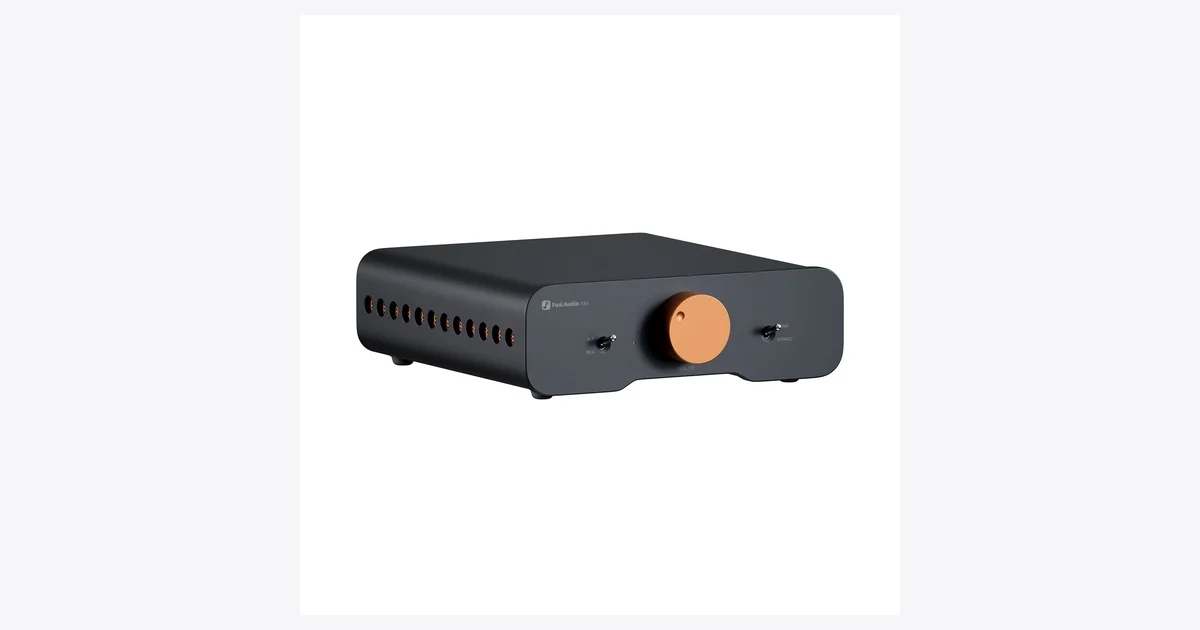
The ZA3 is a Class D power amplifier built around two Texas Instruments TPA3255 chips, the current darling chip of the budget hi-fi world. “Power amplifier” is the important phrase. It takes a line-level signal in and drives speakers out. It is not a receiver, it has no DAC, no streaming, no Bluetooth, no phono stage. You bring the source, it brings the watts.
What makes it stand out at the price:
- Real power. With the 48V supply it does up to 155W per channel into 4 ohms in stereo. That is not a fudged peak number, it is the kind of continuous power that drives inefficient bookshelf speakers to uncomfortable volume without strain.
- Balanced XLR inputs. At $130. I had to read that twice when I first saw it. Balanced inputs reject noise on the cable run, which matters if your amp sits across the room from your source. Most amps with XLR start in the four-figure range.
- Stereo or mono. A switch on the back flips each unit into bridged mono mode, turning it into a 235W monoblock. Buy one now, buy a second later, run them as a pair of monoblocks for a serious bump in power and channel separation.
- RCA and TRS inputs too. Single-ended RCA for normal sources, quarter-inch TRS if you are coming from pro gear. Three input types covers basically everything.
It is a five-inch aluminum brick. It runs cool. It disappears behind the speakers. And it costs less than a nice pair of headphones.
The Power Supply Catch You Need to Know About
Here is the one thing that trips people up, and the closest thing to a real catch.
The TPA3255 chip can deliver its rated power only when you feed it enough voltage. The ZA3’s headline 155W-per-channel number requires the 48V power supply. Some bundles ship with a smaller 32V brick, and with that supply the same amp only does about 95W per channel in stereo. Still plenty for most rooms, but not the number on the box.
If you are buying the ZA3 to drive demanding speakers, or you just want the full headroom you paid for, get the version bundled with the 48V supply or add the Fosi 48V 10A power supply separately. The difference between 32V and 48V is audible the moment you push the amp: the bigger supply holds composure on dynamic peaks where the smaller one starts to flatten. I ran both. The 48V is the one to own.
This is not Fosi hiding the ball, the specs are printed plainly. But it is the single most common reason someone is underwhelmed by a ZA3, and it is entirely avoidable. Buy the right brick.
My Setup
For context on the listening notes below, here is the chain I tested it in:
- Source: a WiiM streamer feeding the ZA3 over balanced XLR from its line out, plus a separate test with a desktop DAC over RCA.
- Speakers: my reference passive bookshelf pair, 87dB sensitivity, 6 ohm nominal, the kind of speaker that exposes a weak amp.
- Power: the 48V 10A supply, not the smaller brick.
- Cable: 14 AWG speaker wire and decent XLR interconnects.
That is a deliberately revealing setup. Bookshelf speakers in the mid-80s for sensitivity are exactly where cheap amps run out of clean power and start to sound hard and compressed at volume. If the ZA3 could drive these well, it could drive anything a normal person owns.
How It Sounds
The honest headline: it sounds like a good amp, not like a cheap amp doing an impression of one.
It is quiet. This is the thing that surprised me most. Class D budget amps have a reputation for hiss and a faint whine. The ZA3 is dead silent at idle through my speakers. Ear to the tweeter you can find a whisper of noise; from the listening seat there is nothing. That black background is a big part of why it sounds more expensive than it is.
It has real grip on the bass. With the 48V supply, the amp keeps a firm hold on the woofers during dynamic passages. Kick drums hit and stop cleanly instead of smearing. This is where the power matters. A weaker amp would round off the leading edge of a bass note; the ZA3 keeps it tight.
The midrange is clean and uncolored. Vocals sit where they should, neither pushed forward nor recessed. The TPA3255 has a deserved reputation for a clean, neutral midband and the ZA3 delivers it. This is not a warm, fuzzy, forgiving amp. It plays what you feed it.
The treble is detailed, occasionally a touch lit. On bright recordings through bright speakers, the top end can get a little assertive. It is not harsh, but it is honest to a fault. Pair it with a slightly warm speaker and it is perfect. Pair it with an already-bright speaker and you might reach for the tone control, which brings me to my one real sonic gripe.
The tone controls are always in the path. The ZA3 has bass and treble knobs, and there is no clean defeat switch that takes them fully out of the analog signal path. Set flat they are close to neutral, but a purist who wants the shortest possible path from input to speaker will notice they are there. For most people this is a non-issue or even a feature. For the “no tone controls ever” crowd, it is a small philosophical itch.
Stereo Versus Mono
The party trick is the mono switch. Flip one ZA3 to bridged mono and it becomes a 235W monoblock. Buy two, run one per channel, and you get a dual-mono setup with more power and better channel separation than the single-unit stereo mode.
Is it worth it? For most people, no. A single ZA3 in stereo already over-drives typical bookshelf speakers in a normal room. The monoblock path is for people running power-hungry floorstanders, large rooms, or just chasing the last bit of dynamic headroom. The fact that the upgrade path exists for the price of a second $130 box, rather than a $2,000 amp trade-in, is the point. You are not boxed in.
I ran a single unit in stereo for daily listening and briefly tested two in mono. The mono pair is genuinely better on hard dynamic swings, but the improvement is the kind you have to listen for, not the kind that hits you over the head. Start with one.
Where It Fits, and Where It Does Not
The ZA3 is a power amp, so it needs a source that can set the volume. That means one of:
- A streamer with a variable line out (my WiiM does this).
- A DAC or preamp with a volume control.
- Any source with its own volume that you trust to feed line level.
If you want one box that streams, decodes, and amplifies, the ZA3 is not it, and you should look at an integrated streaming amp instead, which I covered in my WiiM Amp review. The ZA3 is for the person building a system from parts, who wants to spend their money on watts and put the smarts somewhere else.
It is also, quietly, a fantastic subwoofer amp and a great way to power a second zone. A ZA3 in mono on a passive sub, or driving a pair of bookshelf speakers in another room off a multi-room source, is a cheap way to add real power to a system.
The Competition
The budget TPA3255 space is crowded. The ZA3’s siblings, the V3 and V3 Mono, are cheaper and very good, but they lack the balanced XLR input and the source flexibility. Aiyima and SMSL make similar boxes. What keeps the ZA3 at the top of my recommendation list is the combination: balanced in, stereo-or-mono out, genuine 48V power, and a price that stays near $130 for the kit you actually want. Nothing else hits all four.
Against “real” hi-fi amps costing $600 and up, the honest take is that the ZA3 gets you most of the way there for a fraction of the cost. The expensive amps have nicer cases, better tone-control bypass, sometimes a hair more refinement at the frequency extremes. They do not have five times the sound quality. The law of diminishing returns is brutal above $200 in amplification, and the ZA3 sits right at the knee of that curve.
The Bottom Line
The Fosi Audio ZA3 is the amp I now hand to anyone who thinks good sound requires a four-figure budget. Feed it the 48V supply, give it a clean source, and it drives real speakers with power, grip, and a black-quiet background that used to mean spending five times as much. The balanced inputs and the stereo-to-mono flexibility are features you simply do not get at this price anywhere else.
The catches are small and avoidable. Buy the 48V version so you get the full power. Bring your own source, because it is a pure power amp. And if you are a tone-control purist, know the knobs live in the path. None of that dents the core verdict.
At around $149.99, the ZA3 is not a compromise you tolerate because you are broke. It is a genuinely good amplifier that happens to be cheap. I have spent a lot more for a lot less, and after six months I am still waiting for the catch that never came.