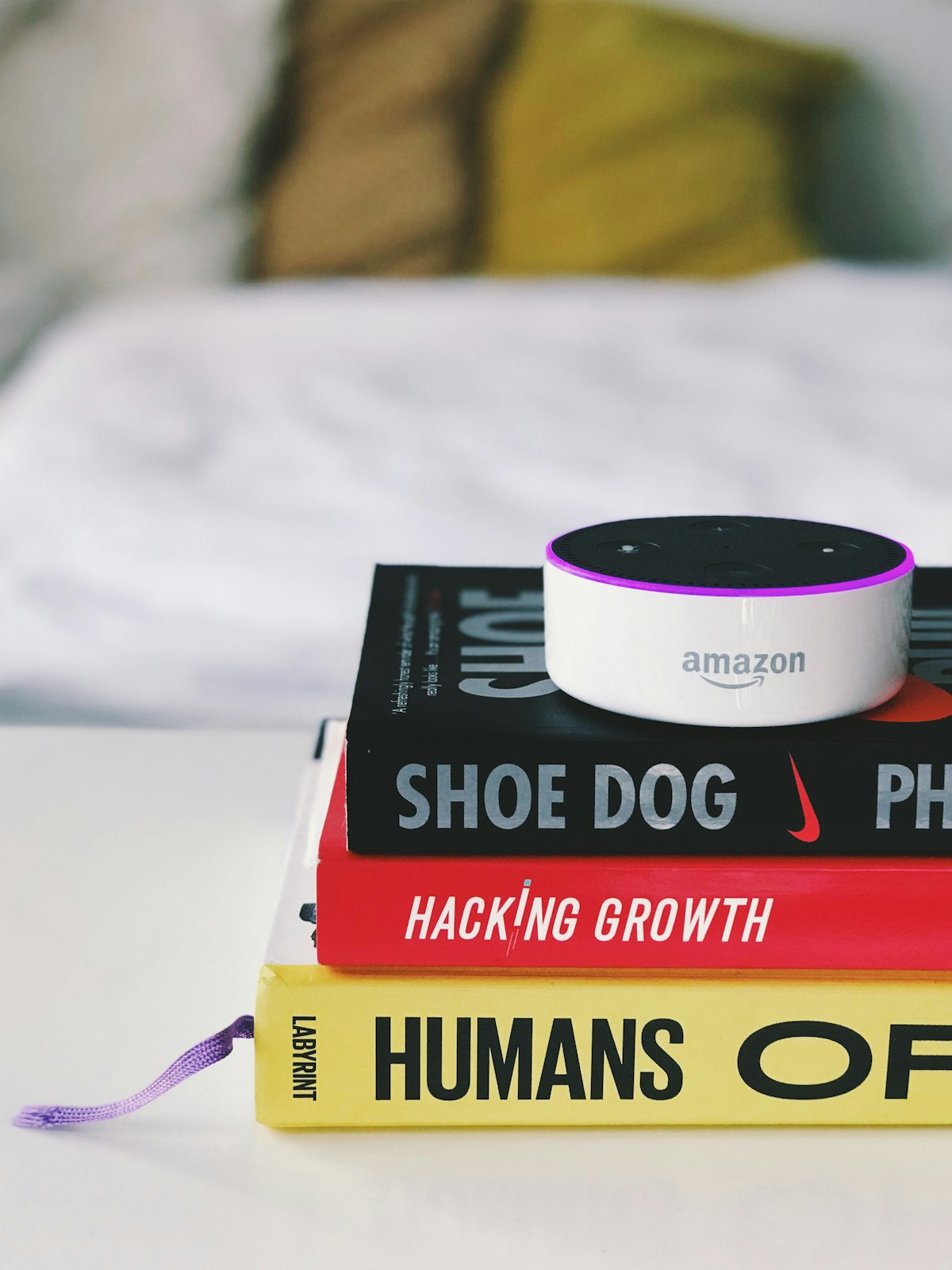
I had nine Amazon Echo devices in my house. Two Echo Dots in bedrooms, one in the kitchen, an Echo Show in the office, a Dot in the garage, and a handful of generations-old hockey-puck originals that I’d stopped paying attention to. They controlled lights, ran timers, played NPR in the morning, and answered the kids’ increasingly elaborate questions about whales.
Last month I unplugged every one of them. They’re sitting in a bin in the basement. The kitchen lights still come on when I walk in. The timers still get set. NPR still plays. Nobody in the house has asked where Alexa went.
This is the writeup of how I got there, why I waited too long, and what’s running in their place. It’s an opinion piece — your house, your call — but if you’ve been quietly annoyed by your Echoes for the last year, you’re not imagining it.
The Slow Decay
The thing nobody warned me about with Alexa is that it gets worse. Not in some sudden, obvious way. In a low, drifting, “did it always do that?” way that you don’t notice month-to-month but is undeniable in aggregate.
A few specific things stopped working well:
- Routines started inserting ads. Not banner ads — spoken ads. I’d say “Alexa, good morning” and somewhere between the weather and the calendar I’d get a fifteen-second pitch for a Prime show. Not every day. Just often enough.
- Basic commands started missing. “Alexa, turn off the kitchen lights” would, twice a week, get “Hmm, I’m not sure” — for a device that had been responding to that exact phrase, on the same network, for three years. The device hadn’t changed. Something on the cloud side had.
- The “by the way” insertions got worse. Ask a yes/no question, get the answer plus a thirty-second upsell to a skill, a deal, or a Prime feature.
- Local-only fallback got worse, not better. Even with my entire smart home running locally through Home Assistant, if Alexa’s cloud was having a bad day, my “turn off the lights” command failed. The Echo had no path to the lights on its own LAN. It just sat there, blinking.
I tolerated this because the muscle memory was there. The kids said “Alexa.” I said “Alexa.” My wife mostly didn’t, but she tolerated it. The cost of switching felt high. It wasn’t, as it turns out.
The Moment It Tipped
The thing that finally pushed me out wasn’t ads. It was a privacy update.
Sometime in early 2025, Amazon ended the option to process voice recordings on-device for the Echo line — every utterance now goes to the cloud, full stop. Their stated reason was “to improve Alexa+.” The practical effect was that any pretense of “your voice stays local if you choose” was gone. Combined with the generative-AI Alexa+ rollout — which monetizes deeper engagement with the device — it was clear that the product I’d bought in 2018 was not the product I now owned.
I’m not a privacy maximalist. I have a phone. I use cloud services. But there’s a difference between a service I opt into for a purpose and a microphone in every room of my house being a non-negotiable feed into a company’s training pipeline. I don’t want my kids’ voices in someone’s dataset by default.
So I pulled them.
What I Replaced Them With
The honest answer is “less than you’d think.” The category of thing Alexa was actually useful for — voice control of smart-home stuff — turns out to be a small slice of how my house works. Most of the useful smart home, I’ve come to realize, has nothing to do with voice. It’s automations that run on their own.
Here’s the actual replacement matrix.
Lights and Climate: Automations Instead of Voice
Ninety percent of my “Alexa, turn off the kitchen lights” usage was at the same moment every night — leaving the kitchen heading to bed. That’s not a voice command. That’s an automation waiting to be written. A motion sensor and a “no motion for 5 minutes after 9pm” rule turns the kitchen off automatically. I haven’t needed to say “turn off the kitchen lights” since I wrote that automation.
For the cases where I really do want manual control, I lean on Lutron Caseta wall switches and Pico remotes. Every room has a switch. Every switch works without the network. Voice was never the most ergonomic way to control a light; a switch by the door always was.
I’ve written more about this in Your Smart Home Should Get Out of the Way — the basic argument being that voice control is a fallback, not a primary interface.
Timers and Quick Questions: A Tablet
The kids used Alexa for timers and “how do you spell” questions. We replaced both with an old iPad mounted on the kitchen wall. It runs the Home Assistant companion app, the Apple weather widget, and a basic timer. The kids open Safari to look things up. It is, importantly, off unless someone touches it.
This was the change my wife noticed and approved of. The kitchen got quieter. Nobody is broadcasting trivia questions to a microphone anymore.
Voice, When We Want It: Home Assistant Voice Preview Edition
For the genuine voice-control use case — hands full, walking through the house — I have one Home Assistant Voice Preview Edition puck in the kitchen. It runs local STT and TTS through my Home Assistant box. It is, by Alexa standards, slower and less natural-sounding. It is also entirely local, has no ads, has no “by the way,” and does exactly what I told it to.
It’s not as good a generalist as Alexa. It’s a much better smart home controller than Alexa.
News and Music
NPR is now on a WiiM Pro feeding the kitchen speakers, set to start at 7am via Home Assistant. Music is the same WiiM, played from Apple Music or our local library, controlled from a phone. Nobody has missed shouting “Alexa, play NPR” across the kitchen. If you’re replacing Echo hardware and still want a capable standalone speaker, I ranked the best smart speakers under $200 by sound quality rather than assistant lock-in.
What I Learned
A few things, in no particular order:
Voice was a smaller part of my smart home than I thought. When I actually counted, fewer than 10% of state changes in Home Assistant in any given week came from a voice command. Ninety percent were automations, presence-based triggers, schedules, or button presses. Removing the voice layer didn’t make the house dumber; it just made me notice how little I was actually using it.
The kids adapted in about a day. This is the one I expected to be hard. It wasn’t. Kids ask each other, ask us, or ask the tablet. The tablet is, frankly, a better answer for them than a microphone — it shows them what the answer looks like written down.
My house got quieter. Not metaphorically. Literally. No more random “by the way,” no more notification sound from the Echo Show in the office, no more accidental wake-words from the TV. The ambient noise floor of the house dropped.
I stopped trusting cloud devices in general. This is the part I didn’t expect. After pulling Alexa, I started looking at every other device in my house with a microphone or a cloud dependency and asking whether it was actually earning its keep. A few weren’t. They left too.
Should You Do This?
Maybe. A few honest questions:
- Do you have routines you actually rely on Alexa for? If your only “smart home” is asking Alexa to turn on a lamp, pulling the Echo will break things until you build automations to replace those commands. Budget a weekend.
- Do you have a Home Assistant install — or are you willing to start one? Without an automation hub, removing Alexa makes things worse. With one, the voice layer becomes a thin optional cap on a system that already works.
- Is the rest of your household on board? This is the actual hard part. The technical work is small. The household-buy-in work is real.
The category of “voice assistant in every room” might still be the right answer for your house. It’s not for mine anymore.
The Echoes are in the basement bin. The lights still come on. The timers still work. I’m not going back.